Surgical Drama-rama
On television, hospital dramas like ER, House, Grey’s Anatomy, and even General Hospital have gained momentum by appealing to viewers’ curiosity about the ins-and-outs of being a doctor and what goes on behind the operating room doors. Saving lives is often portrayed in a dramatic light with frequent gunshot wounds, vomiting blood, exotic diseases, and other adrenaline pumping situations.

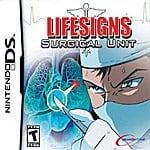
LifeSigns: Surgical Unit touches on a lot of the excitement of emergency room situations, but also thoroughly explores the day-to-day aspects of what goes on in a hospital and the different relationships which develop during the moments in between surgeries.
Two years ago, Trauma Center: Under the Knife introduced DS owners to the concept of surgical simulation with its futuristic, sci-fi story and an emphasis on a large number of extremely difficult touch-screen operations. Though there are some similarities, LifeSigns focuses less on cramming one tough operation after another down players’ throats in quasi-rapid succession. Instead, it places more weight on storytelling and balancing both the fantastic and the mundane elements of working in a busy hospital. You’ll still get to go hands-on with some pretty tense and interesting emergency surgeries, but they’re sandwiched between lengthy rounds of character interaction, plot progression, and fetch quests. The slower pace may turn some players off, but if you enjoy a good hospital drama then LifeSigns shouldn’t have any problems holding your attention.
It’s not just the overtly anime presentation, LifeSigns plays out like a Japanese soap opera in a hospital setting. As the young Dr. Tendo Dokuta, a second year intern at Seimei Medical University Hospital in Japan, players will seek to save lives, deal with personal matters, and explore relationships with staff and patients. Dr. Tendo is portrayed as a bit of a heartthrob, though he seems clueless to this fact, and he gets a lot of attention from female staff members at the hospital. The situations you’ll find yourself in are a bit over-the-top in some cases, which proves to be humorous at times. There are some cultural specific story elements which might be lost on some players. In any event, there’s a lot of flirting and occasional relationship tension scattered among the more serious moments the game has to offer. Without spoiling the story, the game progresses as a series of lengthy episodes which follow suit with the TV show-like vibe. Each episode introduces new characters, situations to resolve, conflict, drama, and surgical operations, although there are some running story themes and characters which carry over.

A large portion of LifeSigns involves exploring different locations on the hospital map (or other places later on in the game) to locate and speak with different characters in order to keep the story moving along. By tapping a map location on the touch screen you can view the room on the upper screen and see if anyone is there to speak with. You’ll move around to different rooms to check on patients, hunt down staff members, and engage in a lot of other plot-specific activities. During your interactions with characters you’ll frequently receive notes which are stored in your inventory. These are later used as conversation points for meeting certain requirements to move ahead in the game. You can speak with a character by simply tapping them on the screen, but introducing specific conversation points requires you to select one from the inventory and drag it onto the person. The controls and play mechanics during the story-heavy portions of the game are fairly rudimentary, and most of the time you’ll be hammering on the B button to scroll through voluminous amounts of excruciatingly dense dialogue.

The gameplay itself gets more exciting once you begin dealing with patients directly. When working on a patient players will have to interview them to obtain information about their symptoms. Once you’ve gathered the necessary information, you’ll be able to give them a physical examination. In most cases patients will be sprawled out on the exam table, and you’ll have to manually search them to come up with a diagnosis using three methods: listening with a stethoscope, palpating them with your hands, and checking areas of their body for visible symptoms. Their responses give you clues on where to search in order to come up with all the symptoms needed for a diagnosis. Once you’ve figured out what’s wrong with them, it’s time to slice and dice.

In operation mode, the top screen shows the patient’s perspective with Dr. Tendo and any other assisting doctors in full scrubs and masks standing over you. The touch screen shows a close-up view of the operation as it progresses. Most operations begin with cleaning the site before moving on to making a series of scalpel incisions to get through the first few layers of skin and muscle. Rather than having to guess which tools you’ll need for the job, your attending doctor will let you know what comes next and hand you the appropriate instrument. You are an intern after all. While Trauma Center went for a more realistic look for its operations, the innards in LifeSigns have a more cartoon-like style which is not quite as life-like. The art direction on the operating table is visually appealing despite the fact you’re looking at a person’s internal organs in many cases.
As players progress through each phase of a step-by-step operation they’ll be drilling skulls open, suturing leaky organs, removing diseased tissue, and conducting a relatively wide range of other medical procedures. Pressing the L button enters concentration mode which temporarily slows time and provides a momentary visual guide for you to follow. Then it’s just a matter of moving the stylus where indicated as quickly and accurately as possible. A false move or shaky hand will harm the patient and knock their health down a few notches. If you take too long or make too many mistakes, the patient will lose health and eventually go into cardiac arrest. When this happens you have one last chance to use the defibrillator in a heart-shocking mini-game to jump start their system again. If you’re successful, it will boost their health slightly and let you proceed with the operation. Some procedures can take quite a bit of time, but most are over in relatively short order.
The actual number of operations is far less than we’d hoped for, yet the slow pace of the game does make each procedure feel like a reward for your patience. Once the main game is completed it unlocks a mode which allows you to free-play through the surgeries in any order in addition to the handful of non-operation mini-games which pop up from time-to-time in the story. LifeSigns essentially provides a less-difficult alternative to the Trauma Center series by striving to provide more balance between story development, information gathering, and actual operations. It’s mostly successful, aside some bothersome repetition and a handful of other moments where the momentum lags. Fans of anime and hospital dramas will undoubtedly want to scrub-in to see what LifeSigns is all about. They’ll be rewarded with an excellent story and some so-so surgical action.
Features:
RATING OUT OF 5 RATING DESCRIPTION 3.8 Graphics
Solid anime style which look good in the halls or on the slab. 3.2 Control
Everything is a bit oversimplified. Surgeries are still fun and challenging, but there’s not a lot of variety in controls. 3.3 Music / Sound FX / Voice Acting
The sound effects are interesting. Music is varied depending on the situation, yet it’s not particularly amazing one way or the other. 3.7
Play Value
If you do not tire of the slow pace and the lengthy bouts of story progression between operations, LifeSigns proves to be quite a satisfying hospital drama experience.
3.5 Overall Rating – Good
Not an average. See Rating legend above for a final score breakdown.