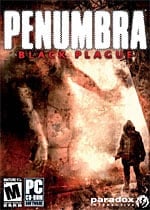
It’s No Puzzle To Figure Out Why This Game Is So Much Fun
There is little doubt the point-and-click genre’s days are numbered. It’s an old-school genre that shows little signs of a renaissance. The decline in interest is not necessarily attributed to the competition from games that offer more control over the playable characters, such as shooters and action adventure games, but largely due to the genre itself which has seen a lot of second-rate offerings. The genre is relatively easy to produce which means that it doesn’t take a huge budget to make a point-and-click style game. Consequently, we see a lot of games that shouldn’t really be on the market. They suffer from badly written stories and dialogue, to awful graphics, stiff animations, and terrible voice acting.
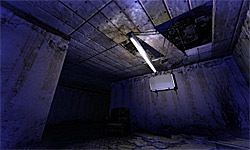
Most of the low budget production values could be overlooked if the puzzles were of any quality. Sadly, this is usually the first gameplay element to show signs of unintelligent life. Nothing makes a game more frustrating than esoteric puzzles that don’t relate to the gameplay. They seem to be included as an afterthought to pad the content in an effort to make the game longer. These puzzles are often trial and error, and even when you do discover the solution, typically with the aid of a walkthrough, they still don’t make any sense. You can’t see how you would have ever figured them out if it weren’t for pure dumb luck.
Fortunately, the puzzles in Penumbra: Black Plague all relate to the gameplay. They are intuitive and fun. You get a fighting chance to solve them. Sure, some are on the repetitive side with a lot of flipping and switching, but they relate to the gameplay and you can actually figure them out. But there’s a lot more to Penumbra: Black Plague than just puzzles. Everything is combined to produce a satisfying adventure game that is truly unique. This isn’t your standard point-and-click adventure game. It may not revolutionize the genre, but it’s a click in the right direction.
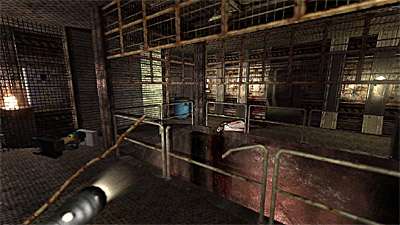
Black Plague is the sequel and final chapter to the Penumbra series, which features a horror survival style of gameplay. Virtually everything has been reworked for this last half of the series. It looks better, sounds better, plays better, controls better, and there are no more damn dogs attacking you every few minutes. The story chronicles the adventures of a young man named Phillip as he investigates the mysterious death of his father that haunts him to no end. Phillip’s journey takes him to Greenland where he is literally forced to explore the underground which lends itself to deep, dark, and creepy places where you can expect that just about anything may happen – or appear.
Perhaps the most unique aspect of the gameplay is the way in which the control system has been designed. While it appears to have all of the trappings of the point-and-click genre, it’s actually far more interactive. You could consider this an action adventure game as your character is controlled in the first-person. While you still use the mouse to point, and essentially to click, there are a myriad of moves that can be executed that will allow you to push, pull, drag, twist, turn, examine, pick up, throw, and break various items and objects. This level of control immerses you into the environment like never before. The ability to pick up an object and throw it, or to use it as a tool, makes combat and puzzle solving a much more intense gameplay experience.
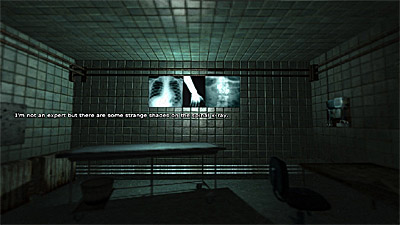
While exploring the various corridors and rooms for clues, you will encounter a variety of objects and items such as desks, drawers, closets, books, crates, switches, levers, and an assortment of items that can be used as tools or weapons when picked up and put into action.
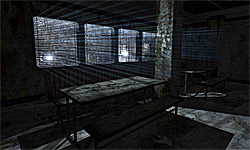
The moves are context-sensitive which means that the action you want to perform is relatively obvious, so the CPU limits your choices accordingly. This feature doesn’t require you to memorize a plethora of options from the keyboard. Your control is relegated to the direction and force of the action as you move the mouse in relation to it. For instance, if you position the cursor icon (a tiny hand) close to a drawer, and pull the mouse away from its stationary position you will replicate the virtual opening of the drawer onscreen. If you want to open a door, get your character in he proper position and push that mouse in the direction you want the door opened. There is no feedback or resistance, but at least the movement is realistic and satisfying.
Coming across an axe, you can pick it up and chop your way through a crate or a wooden door. An iron bar can be used to pry open a locked gate. There isn’t much in the way of combat, although you can throw a few things at the sounds that you hear in the darkness. A flashlight is one of your best weapons against the darkness. It helps creates a tense and suspenseful atmosphere as it only illuminates a small radius, allowing all kinds of monstrosities to lurk in your immediate, darkened vicinity. Moans, groans, heavy breathing, footsteps, rustling, dragging, and other ungodly sounds ensconce you. It’s more frightening to imagine what you are likely to discover than it is actually discovering it, although there are some really nice shockers. So shocking, in fact, that you may begin to question your own sanity. This is a very real gameplay element in which you, as the character, begin to second-guess events. So bizarre are some of the situations that you start to believe that you are losing your grip on reality. This is another example of how the puzzles are woven into the gameplay and storyline.
As you might suspect, the production values are rather low and no more is that evident than with the graphics. The creepy environments, filled with trash, rot, rust, mold, mildew, and other examples of death and decay look convincing, but the other normal environments, and the up-close details of objects, can be downright ugly. The characters animate like puppets, and the voice acting can be a little too detached at times, not making me really believe the actor is feeling his emotions. The music is great, as are the sound effects, which really helps to drive home the fact that you’re in a scary, surreal world.
Black Plague is not a very long game. Even the average gamer can complete it in one sitting. As I mentioned, the puzzles aren’t difficult; they only require some thought and strategy. They are integral to the storyline and help to keep it relevant and running smoothly. There is virtually no replay value, but at less than twenty bucks it’s a decent deal. Too bad it’s difficult to rent PC games, as this would make the perfect rental.
Black Plague’s success is the result of its individual components. It’s a good game that is unique, refreshing, and fun to play. As far as the adventure game genre goes, it’s definitely in a class by itself.
RATING OUT OF 5 RATING DESCRIPTION 2.5 Graphics
Ugly textures and poor overall detail. Animation is stiff. 4.6 Control
Excellent interactive control system makes this more action than adventure. 4.1 Music / Sound FX / Voice Acting
Great sound effects and scary ambient music. Voice acting is weak. 4.2 Play Value
Engrossing story and puzzles, guaranteed to give you the willies. No replay value. 4.3 Overall Rating – Great
Not an average. See Rating legend above for a final score breakdown.
Game Features: