Generation Gap
Fans of Sonic the Hedgehog are some of the most resilient. Over the years, they’ve been in the unenviable position of having their hopes dashed after nearly every new entry in the Sonic series. Numerous cameos and disturbing alter egos had many fans longing for the days when 16-bit graphics were the best graphics anyone had ever seen. It’s no surprise, then, that when SEGA announced Sonic Generations, it was met with a fair amount of skepticism. We’ll reserve our judgment until the full release, but from what we’ve seen so far, this is definitely a step in the right direction, if not a flat out sprint.
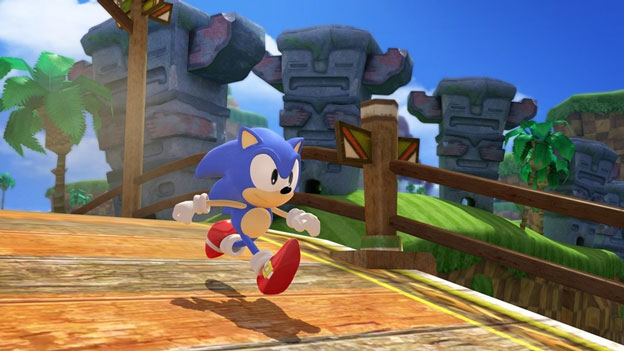
Sonic Generations is basically an amalgam of everything good from the great 2D Sonic games we remember, with the good bits of the more recent 3D Sonic games—sans Werehog, of course. During our time with a demo build of the game, we were able to take a good look at both the classic 2D and modern 3D game modes. All of the stages are available for both game modes, which allows for some interesting experiences. If you’re familiar with any of the 3D Sonic games that have been released since Adventure for SEGA Dreamcast, controlling 3D Sonic shouldn’t be a problem. The homing attack from previous games has been preserved here, and the sense of speed is fairly ridiculous. The Blue Blur handles just as you’d remember, with a few exceptions. Pressing X/Square allows you to roll into a ball at speed, avoiding dangerous objects. The control scheme appears to have been streamlined because of this, though the difficulty remained mostly intact. The level design in 3D mode is a mix of classic level elements—like the corkscrew and the loop-de-loop—mixed in with reimagined versions of old favorites. The result is a real treat that conjures up just enough nostalgia, from both old and relatively new Sonic adventures, to enhance the experience.
2D Sonic is what old school fans are worried about, though, especially since SEGA’s last attempt at harking back to the days of old, Sonic 4: Episode 1, didn’t exactly nail the “feel” of old school Sonic games. That had to do mostly with the way Sonic controlled. The physics felt a bit too tight in comparison with the titles from the Genesis days. Classic Sonic always controlled with a sense of weight and momentum, making him a challenge to control at speed. That, coupled with the level design in the first four games, made for some memorable gameplay, and Sonic 4: Episode 1 was missing that key element. Controlling the Hedgehog wasn’t a real challenge. He didn’t preserve any noticeable level of momentum, so controlling him didn’t feel like a genuine classic Sonic experience.
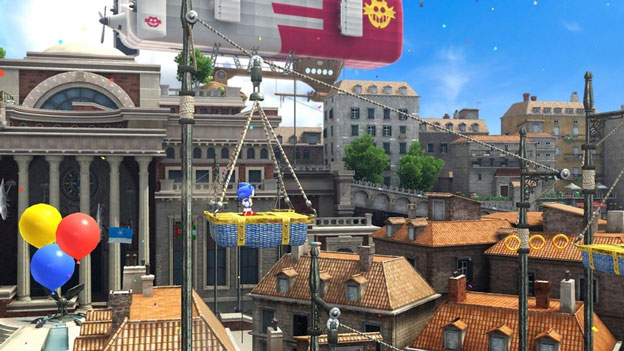
That’s changed in Sonic Generations. If you dash around recklessly here, it probably won’t end well, just as in Sonic’s first foray into the world of gaming. Don’t rely on the homing attack, either, as this move isn’t available in 2D mode. All you’ve got is the Speed Dash, a jump button, and your wits. The stages also harken back to the multi-tiered designs from Sonic’s 16-bit efforts, most notably Sonic 3. It would be a mistake to say that they’re completely 2D, though, as there are a few clever changes in perspective here and there. The control scheme never changes, though, even in the brief 3D sequences.
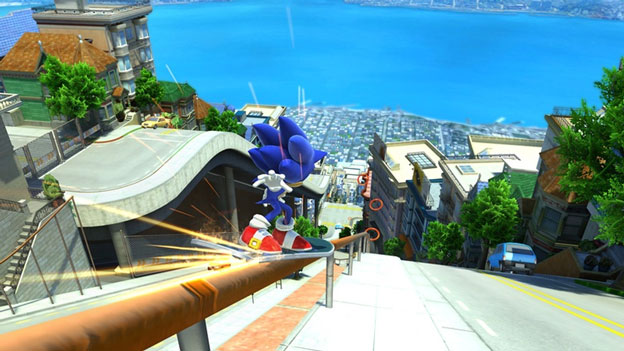
We noticed that the physics seem a more “classic” feel, though truthfully, there’s still some room for improvement. Controlling Sonic feels decidedly better than Sonic 4, though he still feels a bit stiff in comparison to the Genesis titles. Hopefully, by release this November, Sonic Team will have polished the game to a shine. Stay tuned to Cheat Code Central for the review in the weeks to come.
Game Features:
A Sonic For The HD Generation
Until recently, I would have told you that the people over at SEGA shouldn’t be allowed to make Sonic the Hedgehog games any more. Seriously, the last few Sonic titles have tasted a bit like stale bread, and it was starting to feel like SEGA was simply shoehorning Sonic into mediocre games just to make a little extra dough.
The problem is that SEGA had lost sight of what made Sonic games great, and Sonic himself isn’t enough to turn a sub-par title into an enjoyable game. But this year is Sonic the Hedgehog’s 20th birthday, and SEGA has something extra planned in celebration; they’re taking the Sonic franchise back to its basics. Sort of.
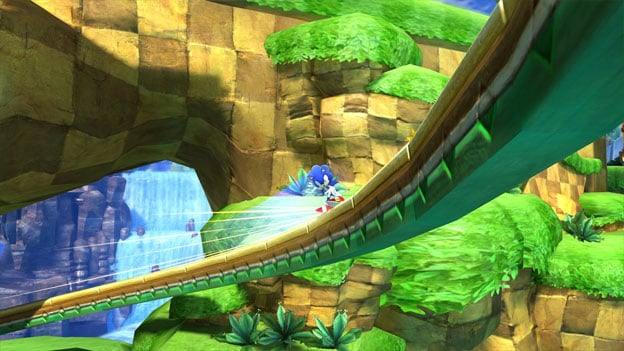
With Sonic Generations, SEGA may have managed to do what no other developer on earth has been able to figure out; make a game that appeals to a fan base with a 20-year age difference between the youngest and oldest players. And if they manage to pull it off, expect to a slew of similarly themed games coming out next year.
Over the last several years, fans of the Sonic franchise have been treated to a decidedly different, and unmistakably skinnier, Sonic. The recent titles have concentrated heavily on immersive 3D experiences, and, while the game retained the same aggressive speed, it lost most of the quirky charm of the original platformer. Older players were turned off by the new direction, and younger players had no real connection to the character, so playing a sub-standard game was unappealing. But Sonic Generations may have managed to bridge this gap with a clever combination of 2D and 3D gameplay. The “Generations” title seems particularly fitting, don’t you think?
Here’s how it works: players are given the choice between 2D side-scrolling gameplay (read: Chubby Sonic), and 3D gameplay (read: Skinny Sonic). Levels are playable in both modes, but each has unique paths and challenges depending on your choice. The 2D mode looks and feels like a classic Sonic the Hedgehog title, except the textures and graphics have been brought into the 21st century. SEGA has also scaled back all of the superfluous attacks and tricks of the recent games for the 2D/Chubby Sonic. Players must instead rely on the tried-and-true spin-dash and classic power-ups.
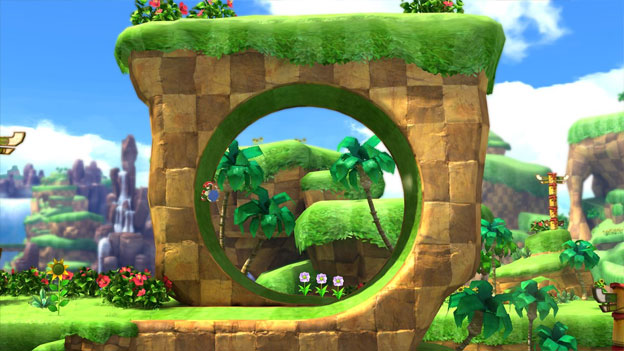
However, the gameplay of 3D/Skinny Sonic is more reminiscent of Sonic Colors and Sonic Unleashed—but hopefully with fewer werehogs. The controls for Skinny Sonic are much tighter than the last couple of titles, but the gameplay is often unmistakably sloppy (a common criticism of the 3D Sonic series). It’s as if Sonic just bought an expensive pair of shoes but forgot to tie them. Skinny Sonic also has the unique ability to switch between third-person and 2D camera modes.
Both versions share a new feature that promises to add an interesting element to the rapid gameplay. Sonic now has the ability to move across 2D planes like a caffeinated version of LittleBigPlanet. Obviously, players will need a new level of dexterity to defeat the evil Dr. Robotnik.
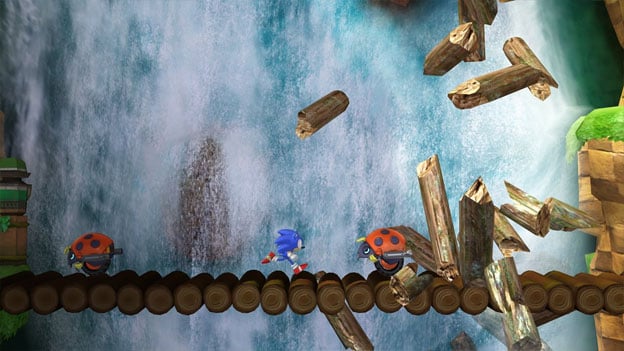
The storyline in Generations seems a bit convenient. I mean, I can’t really complain; after all, I’m playing a game about a blue hedgehog that can run at super-sonic speeds. But it seems unnecessary to add a time-travel plotline to explain the platformer motif. Apparently, Sonic’s friends have been sucked into some “time holes” and Sonic must heroically travel back in time to save them. This plotline provides the fuel for the 2D/3D combination and allows Sonic Generations to explore the depths of Sonic’s 20-year history. For example, players will be transported back to the iconic Green Hill Zone, which is drawn from the Genesis era, while other maps will be drawn from the Dreamcast era and more recent titles.
Now, I’m not yet willing to say if this game is going to revitalize the franchise, but I’m happy to see that SEGA is actually putting the necessary legwork into making a legitimate Sonic title. They’ve made every effort to create a 2D side-scroller that rings true to the Chubby Sonic lovers (down to the charming retro soundtrack), and they’ve added new dimensions to the 3D gameplay for the fans of the Skinny Sonic titles. Either way, it’s worth checking out.
“It’s for the old fans, it’s for the new fans,” said SEGA’s community manager. “It’s kind of for every Sonic fan. And if you’re not a fan of Sonic, this is why you should be.” Hopefully he’s right. But then again, he does gets paid to talk like that.
Game Features: