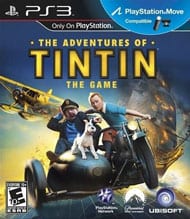
A Belgian Delight
Licensed games in general have a pretty shoddy history, save some shining gems (which include the recent Batman games). Those based on upcoming movies have generally been doubly so, and if the movie and its corresponding game are aimed at a younger set, that’s the death touch. It’s especially impressive, then, that The Adventures of Tintin: The Game, is a competent platformer that, at times, shows flashes of brilliance. So what did Ubisoft do differently?
First of all, the game hasn’t butchered the movie’s story. Too often, when a game comes out ahead of a movie’s release, it either only tangentially touches on the story of that movie, a la Transformers: Dark of the Moon, or butchers the plot into an unrecognizable pulp, clearly designed more as a companion device to whet movie-goers’ appetites for the actual feature. Tintin’s story feels complete, with a logical progression from each locale to the next and explicit and purposeful links between events. One gets a feel for the characters themselves, as well as their development, as they move through the game, and it feels good . Other movie tie-in developers should take note.
Secondly, it controls well. Very well. Platforming is fluid and natural. I never felt that I was fighting with Tintin, Snowy, or Haddock to make the character do what I wanted him to do. There’s an excellent texture to the motion, with good weight and a terrific sense of momentum, with detailed animations that serve to preserve the continuity between different movements. This isn’t a specific area in which movie tie-ins need to improve, but a general note about platformers that stretches back to the original Super Mario Bros.: making the controls precise and making them intuitive are two very different things. The Adventures of Tintin finds a balance far from the extremes of Super Meat Boy and Prince of Persia. Combat is awkward and clunky, with stilted melee mechanics, but that seems to be intentional, as there is almost always a better way to dispatch enemies than punching them repeatedly.
Then there’s the audio-visual experience. The Adventures of Tintin has a simple, clean look that apes the design of the upcoming movie and successfully translates it into something eminently playable. The environments are distinct and interesting, colorful and engaging. This applies to the characters as well, who are skillfully acted both during cutscenes and in their ambient dialogue as they move through the game. I caught myself stopping to listen to the enemies talking while they were still unaware of my presence. They were often good for a laugh, particularly in the co-operative game mode, during which they reference the absurd premise of the “Tintin and Haddock” experience. The music is bombastic and suitably epic, the majority of the sound-effects clear and satisfying, with impacts accompanied by a musical tone a la Zelda.
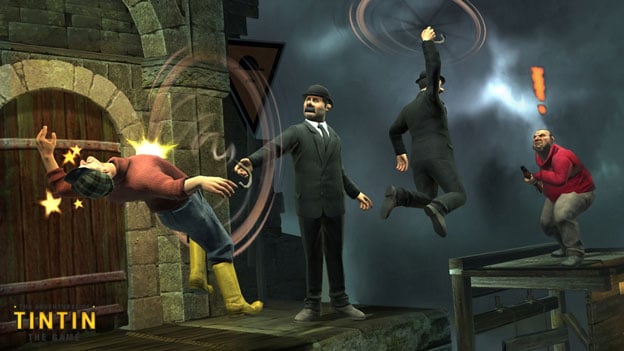
There are some niggling annoyances, however, such as the strange form of polysyllabic tourette syndrome that Haddock seems to have inherited from his ancestor. He’s constantly blurting out “blistering barnacles,” calling ne’er-do-wells “bashi-bazouks,” and going on about “diplodocuses” and “interstellar pirates.” It’s all very surreal and distracting, particularly since his ambient dialogue consists almost entirely of such utterances. Also, while most of the characters are caricatures, modeled with various exaggerated features, Tintin seems designed to look more realistic and falls right into the uncanny valley as a result. It’s good that one doesn’t see him up close too much, because it’s creepy when it happens. More frustrating, the video segments seem to have been constructed with the in-game engine, but are pixilated, lower resolution, and run at a significantly slower frame-rate than the game proper, which is just jarring.
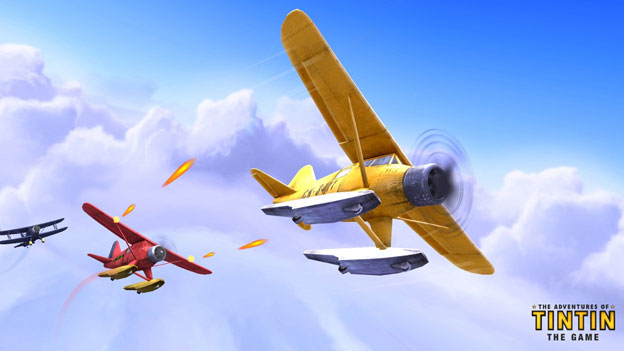
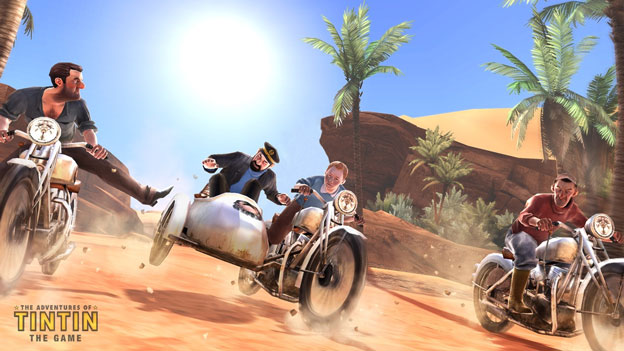
Further, while the primary gameplay is appropriately polished, the interspersed minigame levels are too simplistic to be of any real interest or value. Whether flying a plane, riding in a motorcycle and sidecar, or battling pirates as they board your ship, the action is one-note and dull. Luckily, these segments are fairly short. They’re available as timed challenges from the main menu, too, but it doesn’t feel as though there’s much of a reason to play them. They also come in a motion-enhanced flavor, though the Kinect, at least, did little to make them any more engaging, instead forcing even greater simplification on an already barren framework. There are also moments in the story in which players move around through 3D environments. This is rarely used for more than a bit of investigative work and getting from point A to point B. While it does serve to add necessary links to the story chain, these moments could just as easily have been handled with cutscenes.
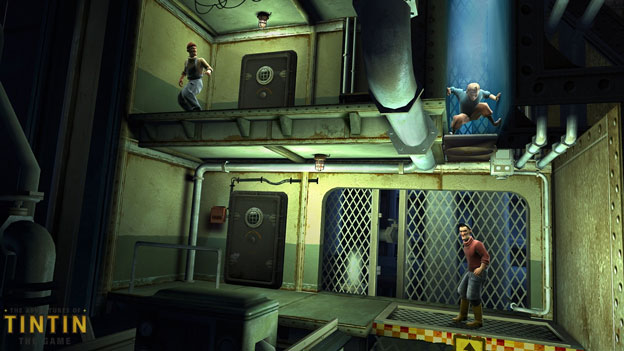
The main story of The Adventures of Tintin takes mere hours to complete. Under five, in my experience. There is more to do, though, and not just the minigame challenges, but a full-fledged second platforming mode. The aforementioned “Tin Tin and Haddock” game mode takes place after the events of the story, inside an unconscious Captain Haddock’s head. The gameplay is very similar to that of the main game, but is expanded with additional characters, each of whom has their own special abilities, and optional co-op. Those playing alone, however, can switch between characters (as well as change their costumes) on the fly, allowing them to freely navigate the levels as long as they’ve unlocked the necessary individuals to do so. It’s an expansive gameplay mode that builds on what was done well in the story, increasing the challenge and providing, in sum, more entertainment than the actual campaign. It is, by far, the best part of the game, with tons of unlockable costumes and bonus levels. The surreal nature of the experience also allows the developers to go nuts with their design elements, including such things as a giant Tintin in the background and a boss battle with Castafiore’s high-pitched head.
The Adventures of Tintin: The Game is far from perfect, and its simple gameplay and (mostly) shallow puzzles aren’t going to entertain one for long. Still, it’s an extremely solid movie tie-in and a mostly seamless platforming experience, with polish where it counts. It smartly sidesteps the pitfalls of excessive frustration and disjointed storytelling, opting to provide a short, enjoyable experience rather than an extended and repetitive one. For that, and the production values it displays, it deserves praise. The low-fidelity video, however, is inexcusable in a movie-licensed property and the minigames are generally unnecessary, simply taking time away from what was otherwise an enjoyable sidescrolling experience.
RATING OUT OF 5 RATING DESCRIPTION 4.0 Graphics
Charming, colorful, and clean throughout, though Tintin himself hits the Uncanny Valley running and the cutscenes are grainy and disappointing. 4.5 Control
Always tight and intuitive, the controls will never be blamed for one’s failures and foibles. The motion control situation is a bit less cohesive, but it’s entirely optional. 4.0 Music / Sound FX / Voice Acting
The characters sound great and the music and sound effects are uplifting and satisfying, respectively. That said, Haddock’s constant stream of PG expletives is more annoying than endearing. 3.0 Play Value
It’s unfortunate that the game is so short, but the co-op mode does add an additional incentive to keep playing. Probably under a dozen hours in total, though. 3.7 Overall Rating – Good
Not an average. See Rating legend below for a final score breakdown.
| Review Rating Legend | |||
|---|---|---|---|
| 0.1 – 1.9 = Avoid | 2.5 – 2.9 = Average | 3.5 – 3.9 = Good | 4.5 – 4.9 = Must Buy |
| 2.0 – 2.4 = Poor | 3.0 – 3.4 = Fair | 4.0 – 4.4 = Great | 5.0 = The Best |
Game Features: