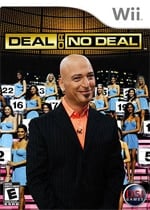
Game shows could arguably be considered one of the precursors to the modern day phenomenon (or atrocity, depending on your viewpoint) known as reality TV. Little has changed about the appeal of game shows since the early days; they’re still essentially about watching average Joes get up on a stage and compete in some manner of challenges for a chance to win cool prizes or lose out big time. For most viewers, watching someone else win a ton of money (lucky bastards) isn’t nearly as entertaining as the tense, give-and-take nature of the game itself.

One minute a contestant can be mere seconds from winning a million dollars; the next they could be going home empty handed. To keep viewers from flipping the channel, modern game shows must ramp up the intensity and increase the stakes to lofty heights. NBC’s Deal or No Deal is a great example of gripping game show TV done right – players are constantly risking it all in hopes of winding up with the greatest sum of cash possible, and it’s thrilling to watch them brave the odds. However, does a game show that requires absolutely no skill or strategy to play really succeed in video game form when there’s no actual money involved?
Deal or No Deal, featuring host Howie Mandel, is a game of pure chance. It’s about knowing when to push the envelope and when to pack it in and cut your losses. For those who haven’t seen the program, a game starts with a single contestant being presented with a throng of 26 similarly-attired ladies who each carry a numbered briefcase containing a dollar amount from $1 to $1,000,000. Players must pick one case out of the bunch to “keep.” They don’t know whether the case holds a ridiculously high dollar amount or only a few hundred bucks; the rest of the game is a process of elimination aimed at determining whether the case is worth keeping or trading for what might be a higher dollar amount. Players are also given the opportunity to intermittently leverage the odds against a monetary offer provided by “the banker.” They can choose to cut a deal and take home their earnings or push forward in hopes of sweetening the pot.
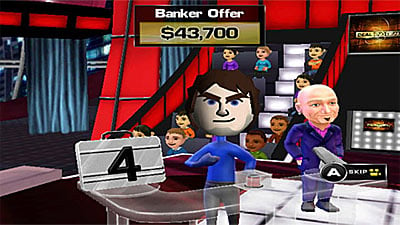
Each round, you’re given a set number of briefcases to open, and you’ll pick these one at a time from among the remaining gals up on the stand. The dollar amount listed inside every case you open rules out a possibility of what could be in the case you first selected. Every once in a while the banker will dial down to Howie and make an offer to buy your briefcase; you can accept his offer or open more briefcases (potentially improving or worsening your situation). The goal is to knock off the lower dollar amounts on the board in hopes the banker will offer you a greater sum. Accidentally getting rid of the higher amounts will lower the amount of money you’re offered by the banker, and this will often fluctuate steadily based on the random amounts you uncover and rule out.
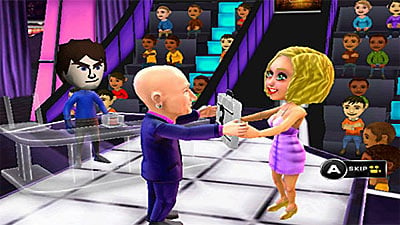
In the actual game show, the trick is to push the envelope until you get a reasonably high dollar amount before you hit the button and settle for a nice fat check – even if its not a million bucks. The problem with Deal or No Deal on the Wii is there’s no real financial risk involved, so there’s not really much incentive to take a deal (which prematurely ends the game). The title could have easily been cropped to simply read No Deal, since there’s little reason to ever choose the alternative option. You might end up with $200 bucks instead of a million, but it’s no biggie. Though the thrill of the risk just isn’t there, that doesn’t mean the game isn’t reasonably entertaining.

The game does a steady job of emulating the feel and presentation of the show. It’s not graphically stunning, yet the set is all there, the gals wear matching formal wear, the audience is very responsive, and the virtual Howie himself is well-composed. He lends his voice work to the title, with ample clips that sound like they were pulled directly from the program itself. The music ebbs and flows with tense anticipation, and the crowd cheers or groans appropriately. Contestants play as their Miis, which is a nice addition. Your Mii character is very emotive and visually changes expressions and actions to correspond with how well or how poorly you’re doing.
As for the gameplay, Deal or No Deal is about as straightforward as the show; you just have to point with the Wii Remote to make your selection and hit the A button. That’s it. Being able to skip through each little scene is handy. In addition to the main TV show-style mode, you can also play several challenge modes that add subtle twists to the gameplay. Variety Ladder lets you play a series of matches with rule changes that offer you double or nothing, double the dollar value, and give you increased opportunities to earn a cool million, among other adjustments. You can also play Risky Business, which has your putting all of your winnings on the line to play another game for cumulative earnings. Banker’s Challenge lets you play as the banker. It’s pretty boring watching the computer play and then making minor changes to the dollar amounts. Unlockable achievement awards provide some incentive to experiment with repeat play sessions, and several mini-games offer minor multiplayer opportunities.
Though they still look and play like the main game, the different play modes save the package from being a total bust. Deal or No Deal is fun to watch on TV, but with no trivia questions to answer or real money to put on the line, it amounts to being as much fun as a scratch ticket – one where you don’t get to keep your earnings even if you do win. Casual players who absolutely love the show will find some enjoyment in the game. However, players seeking even a nominal challenge will want to look elsewhere for their entertainment.
RATING OUT OF 5 RATING DESCRIPTION 3.4 Graphics
A solid representation of the show, even if it’s not particularly stunning. 3.5 Control
Point at the screen and hit a single button. It is what it is. 4.0 Music / Sound FX / Voice Acting
Nice voice work, crowd participation, and mood intensifying music. 3.0
Play Value
A few play modes add some variety, but it’s just not particularly challenging. The fun is fleeting.
3.2 Overall Rating – Fair
Not an average. See Rating legend above for a final score breakdown.
Game Features: